March 2026 | Original Campaign
Know Them Before They're Gone
Scientific illustration + conservation communication
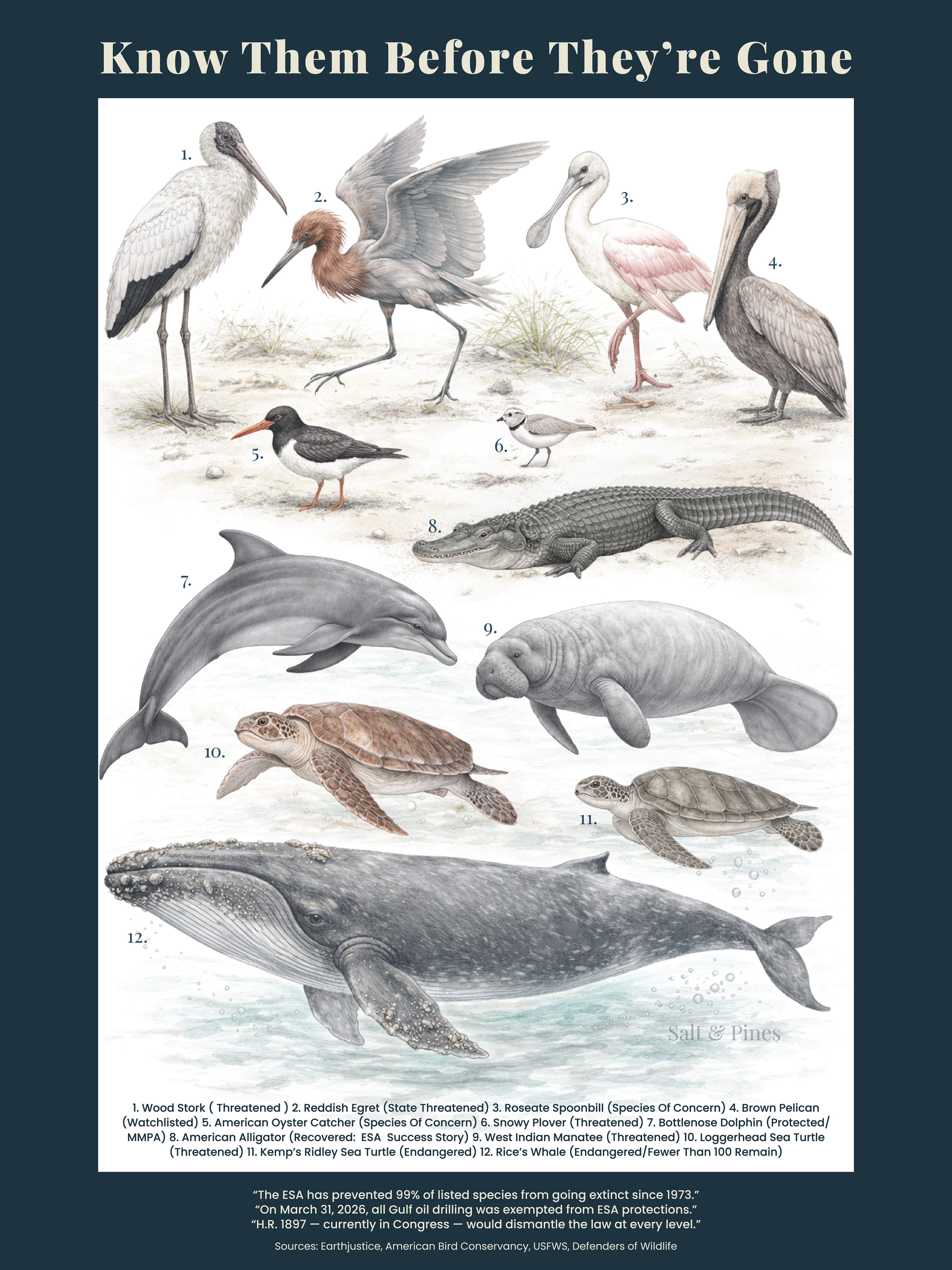
The Gulf of Mexico, where I grew up, is one of the most biologically rich bodies of water on Earth. It is home to wood storks and reddish egrets, manatees and dolphins, sea turtles that have navigated these waters for millions of years, and a whale species so rare that fewer than 100 remain — and every single one of them lives here.
Communications don't stop at publication
The Last Chance List began as a response to changes affecting Endangered Species Act protections and Gulf wildlife in spring 2026. But environmental policy does not stand still.
As federal regulations, species classifications, litigation, and conservation information continued to change, I returned to the campaign in September 2026 to review the original content against current primary sources. I updated species classifications, clarified language around the Gulf oil and gas exemption, incorporated subsequent ESA regulatory changes, and revised messaging where new information required greater precision.
The goal was not to preserve my original copy. It was to preserve the campaign's credibility.
September 2026 | Research + Campaign Update
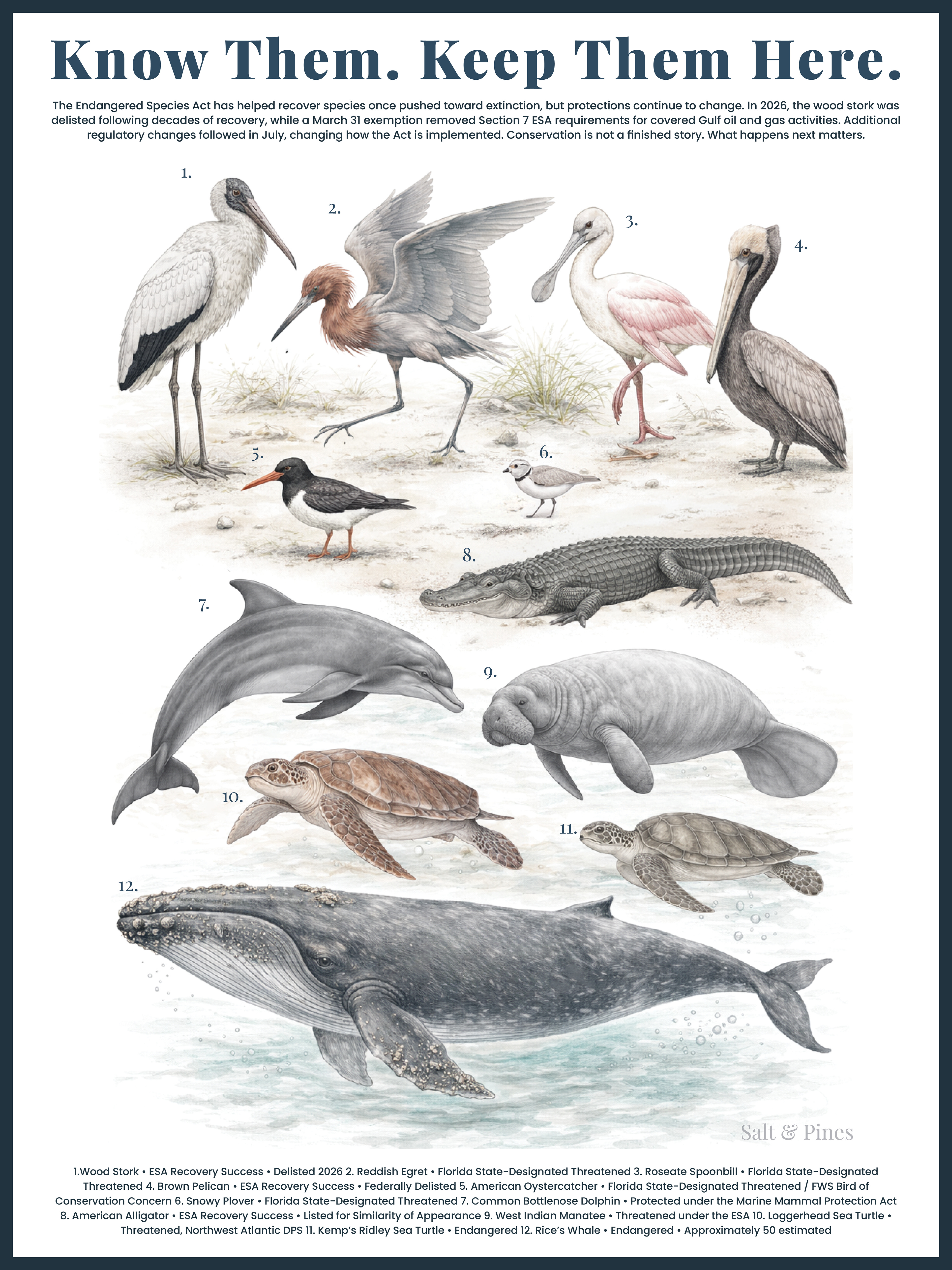
Know Them. Keep Them Here.
The Endangered Species Act has helped recover species once pushed toward extinction, but protections continue to change. In 2026, the wood stork was delisted following decades of recovery, while a March 31 exemption removed Section 7 ESA requirements for covered Gulf oil and gas activities. Additional regulatory changes followed in July, changing how the Act is implemented. Conservation is not a finished story. What happens next matters.
Research: Rechecked species classifications and federal actions against current primary sources.
Species status: Updated the wood stork to reflect its 2026 delisting following recovery.
Policy: Rewrote the Gulf language to accurately describe the March 31 Section 7 exemption rather than implying that the ESA itself had disappeared.
Context: Incorporated subsequent regulatory changes affecting implementation of the ESA.
Messaging: Balanced urgency with evidence of successful conservation, showing that the same law at the center of the policy debate has also contributed to species recovery.
Sources: Reverified campaign claims against current federal, legal, and conservation sources, including the U.S. Fish and Wildlife Service, Department of Justice, and Earthjustice.
Accuracy is part of the creative process.
The update changed more than a few labels. It changed the story I needed to tell. The wood stork offered evidence that conservation protections can work, while the Gulf exemption and subsequent regulatory changes showed how quickly the policy environment can shift. Good advocacy communications cannot rely on emotion alone. The message has to remain accurate enough to earn the audience's trust.
This project reflects how I approach communications from beginning to end: identify the issue, research the facts, find the human or emotional connection, determine the message, build the visual system, adapt it across channels, and revisit the work when circumstances change.
Design is one part of the process. The larger goal is communication that helps people care, understand, and act.