At SWIFT Education Center, I identified a gap between the organization’s equity-centered mission and its own accessibility practices. Because SWIFT’s work included improving outcomes for students with disabilities, I believed our communications needed to reflect the same principles we advocated for in our research and partnerships.
I advocated for a more systematic approach and built accessibility into the creative process itself, developing standards, training, resources, templates, testing practices, and repeatable workflows that could be used across the organization.
Role: Creative Project Manager + Senior Graphic Designer
Scope: Accessibility strategy, design systems, training, remediation, production + quality assurance
Impact: 300+ assets audited or remediated | Organization-wide standards + repeatable workflows | WCAG 2.2 + Section 508
Scope: Accessibility strategy, design systems, training, remediation, production + quality assurance
Impact: 300+ assets audited or remediated | Organization-wide standards + repeatable workflows | WCAG 2.2 + Section 508
The problem
Accessibility was not yet consistently integrated into SWIFT’s communication and production processes, creating a disconnect between the organization’s mission and how audiences experienced its materials.
Accessibility was not yet consistently integrated into SWIFT’s communication and production processes, creating a disconnect between the organization’s mission and how audiences experienced its materials.
The decision
I determined that accessibility could not remain a final compliance check. It needed to become part of how communications were planned, designed, produced, reviewed, and maintained.
I determined that accessibility could not remain a final compliance check. It needed to become part of how communications were planned, designed, produced, reviewed, and maintained.
The action
I developed an organization-wide approach incorporating WCAG 2.2 and Section 508, created standards and accessible templates, built training and reference resources, established testing and remediation practices, and integrated accessibility into ongoing creative workflows.
I developed an organization-wide approach incorporating WCAG 2.2 and Section 508, created standards and accessible templates, built training and reference resources, established testing and remediation practices, and integrated accessibility into ongoing creative workflows.
The impact
More than 300 communication and learning assets were audited or remediated, and accessibility became a repeatable creative practice that could continue across publications, presentations, digital communications, websites, and professional learning resources.
More than 300 communication and learning assets were audited or remediated, and accessibility became a repeatable creative practice that could continue across publications, presentations, digital communications, websites, and professional learning resources.
Accessible Publication Design
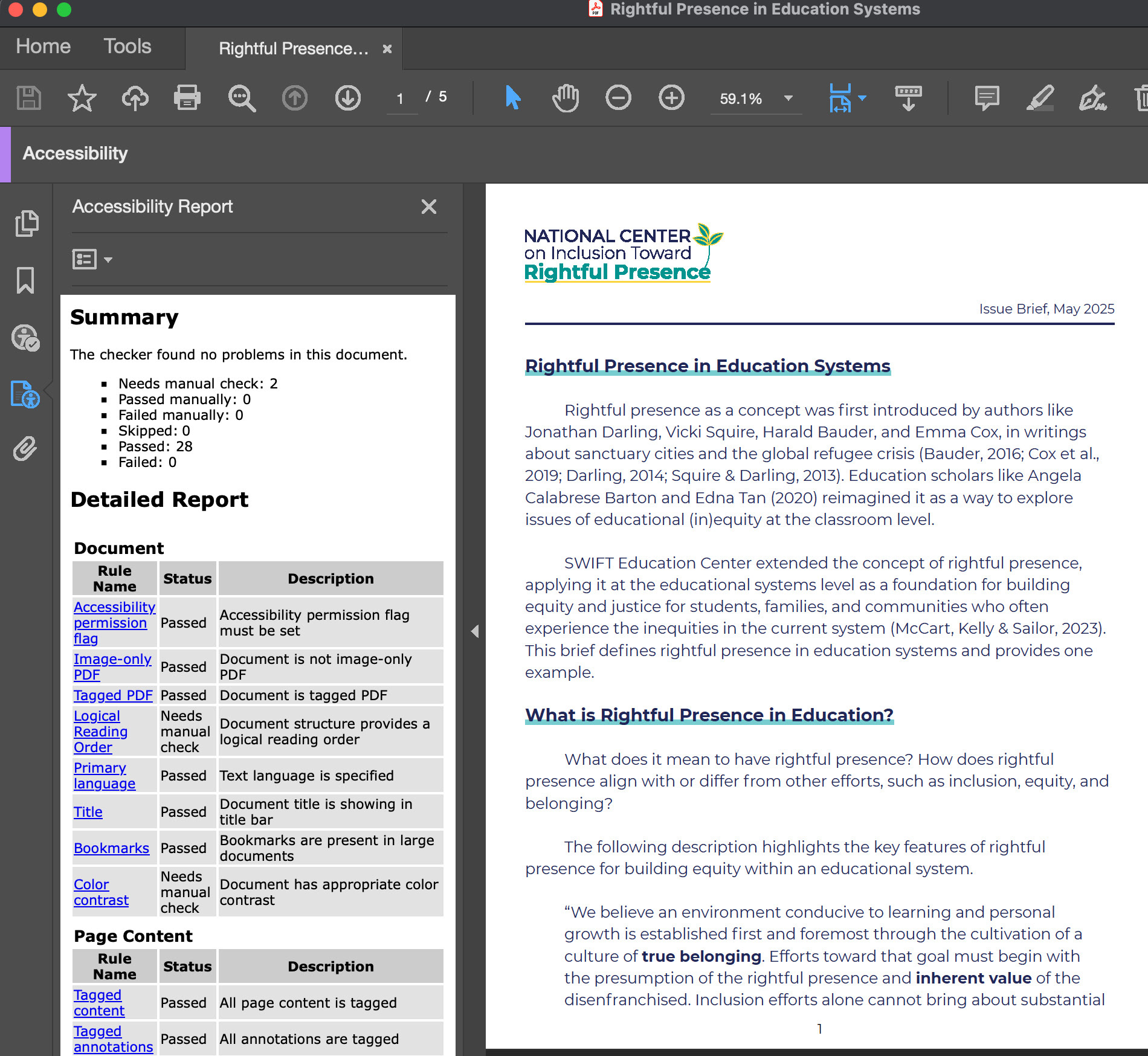
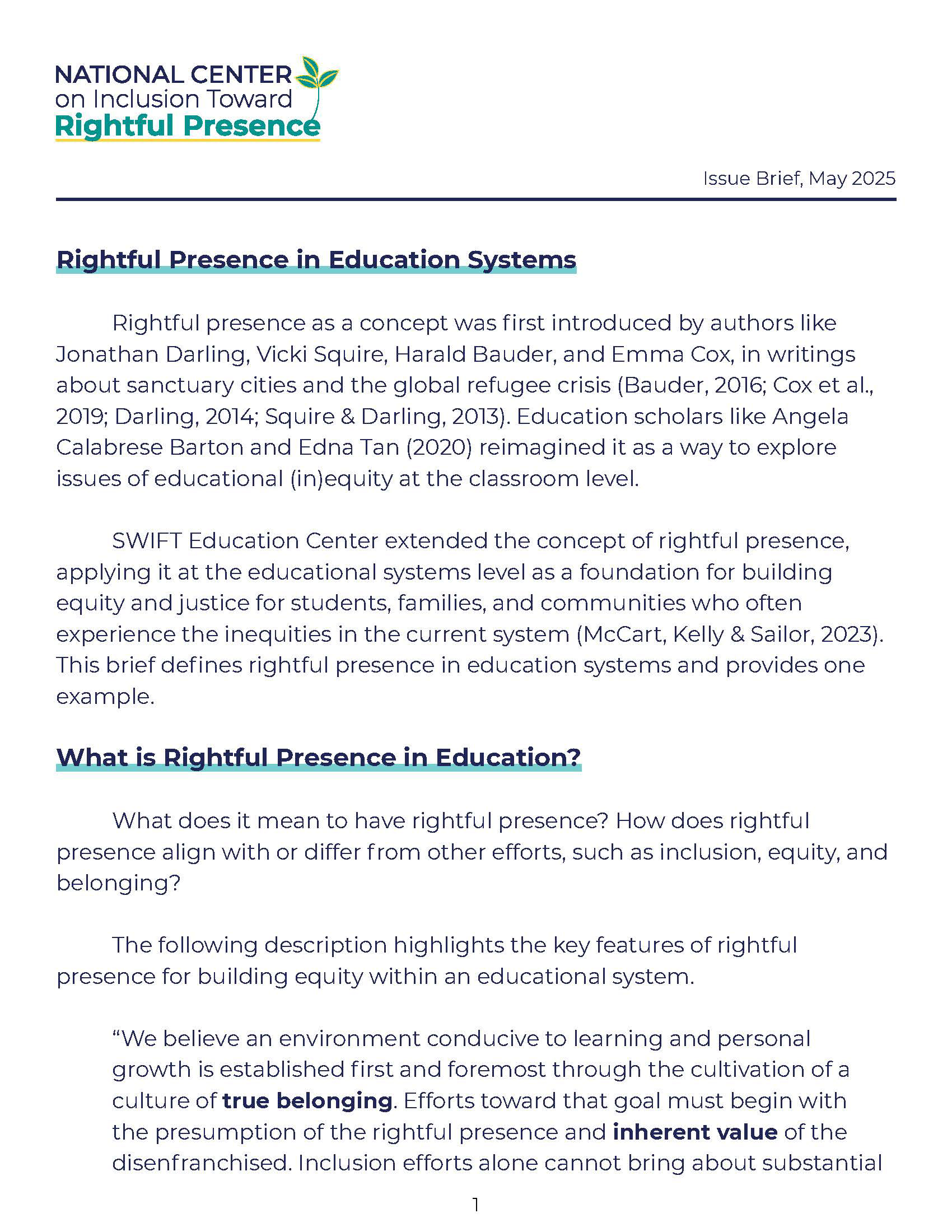
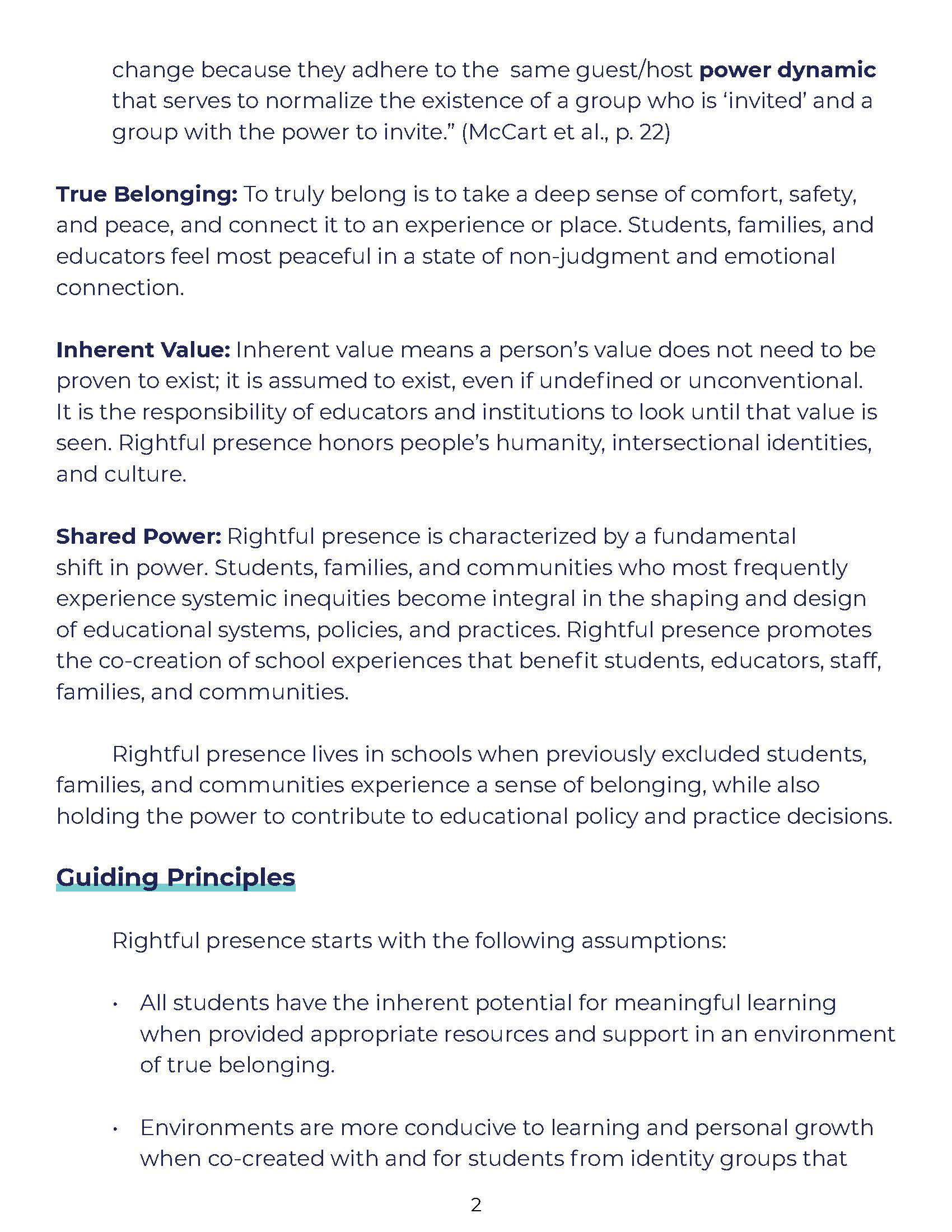
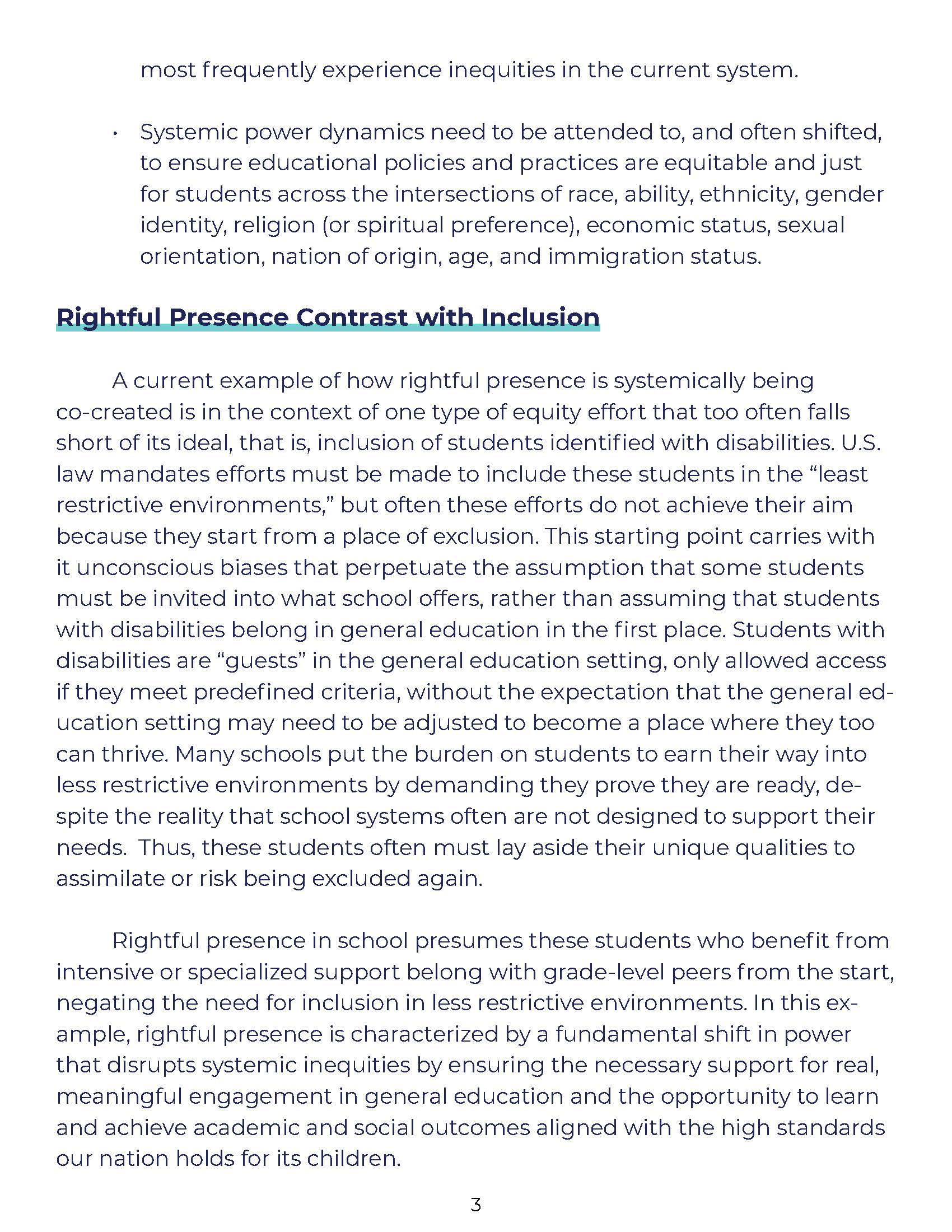
Standards: WCAG 2.2 AA, with applicable AAA criteria incorporated where appropriate | Section 508
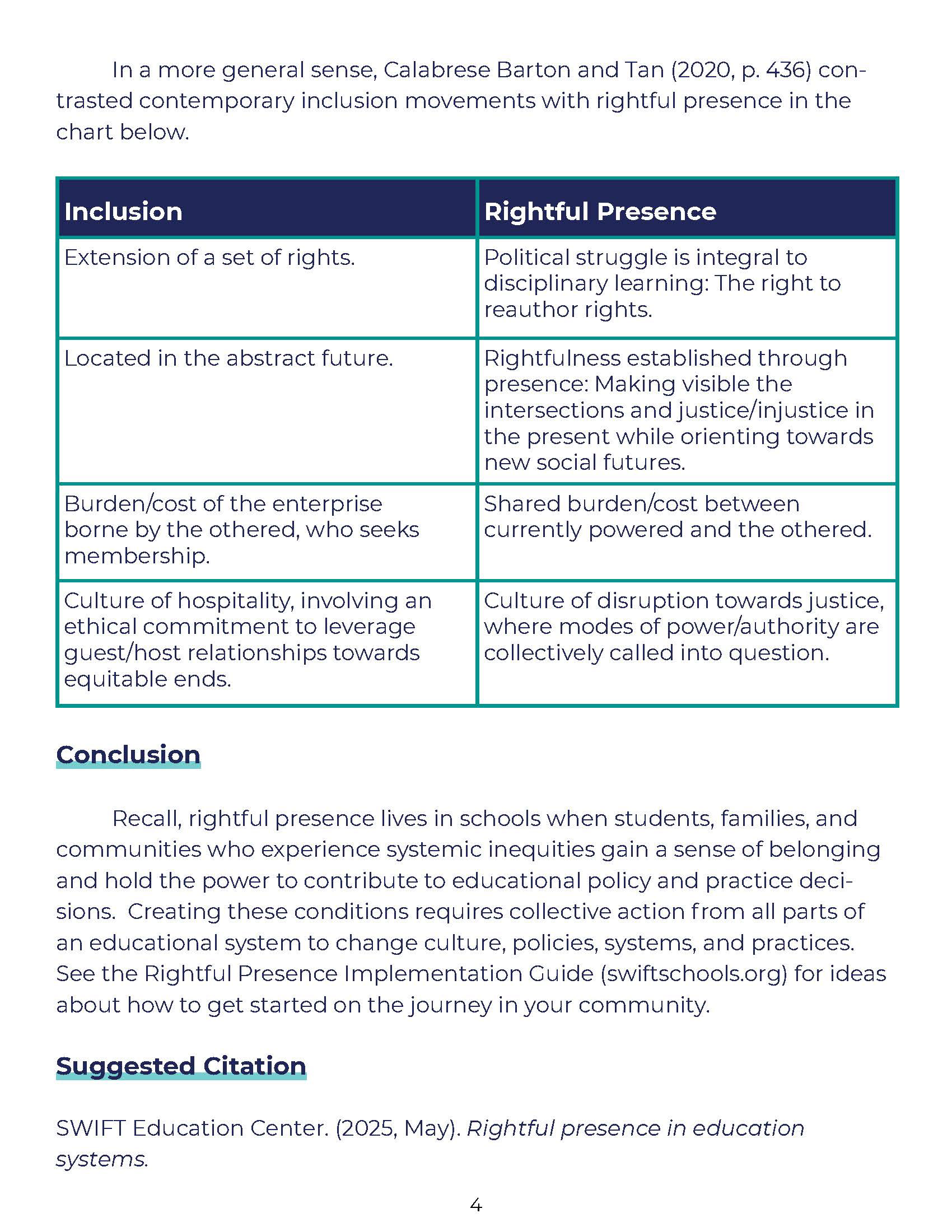
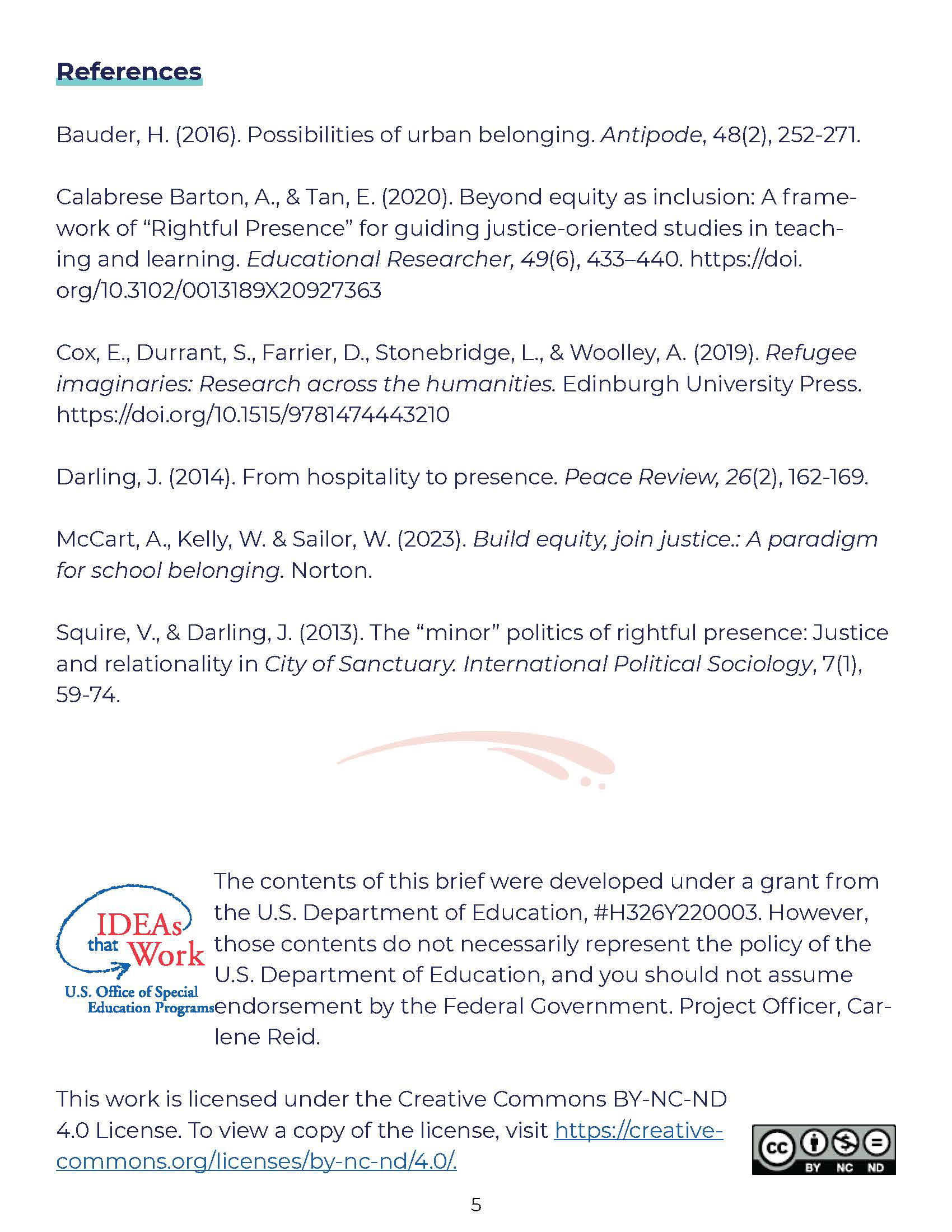
Publications were designed for accessibility from the beginning, with decisions around typography, contrast, hierarchy, reading order, navigation, tables, images, alternative text, and document structure considered during production rather than remediated only after completion.
Accessible Learning Experiences
Accessibility extended beyond publications into professional learning and instructional design. I translated complex research into facilitator resources, Rise 360 courses, and implementation tools designed around information hierarchy, readability, navigation, comprehension, and the different ways users might encounter and interact with the content.
Accessibility Across the System
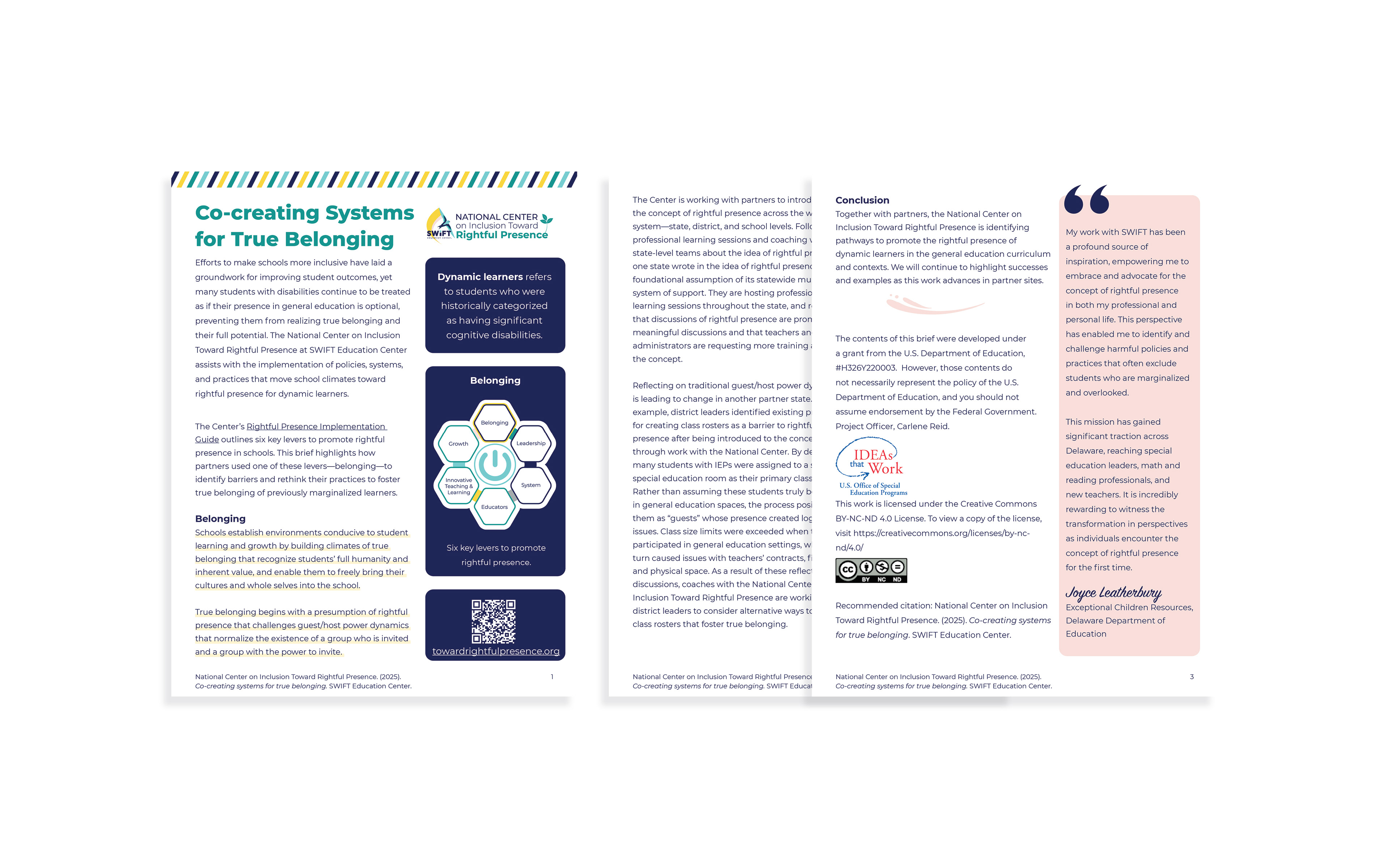
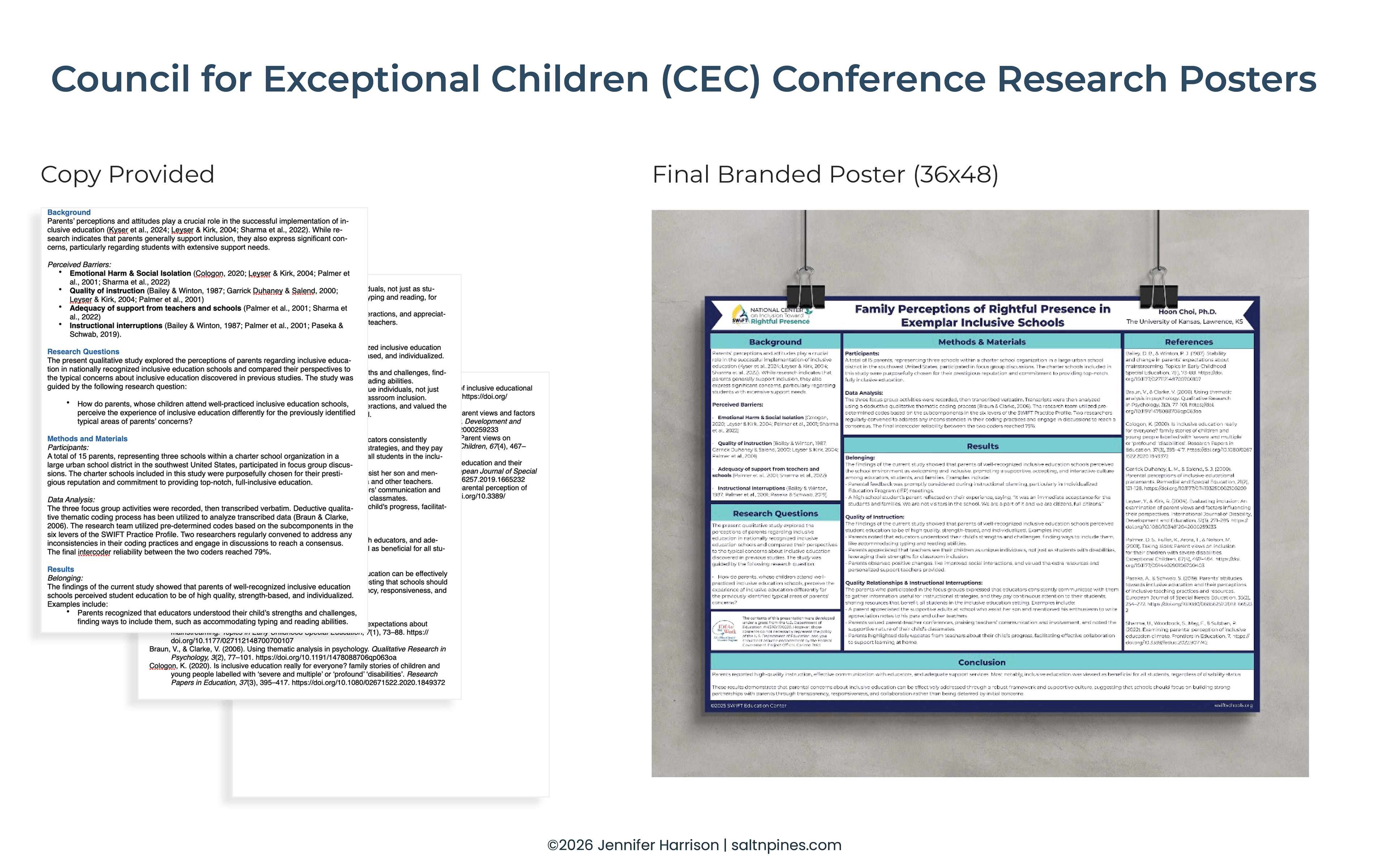
Once the standards and workflows were established, I applied them across a multidisciplinary communication ecosystem spanning research publications, professional learning, presentations, events, digital communications, diagrams, promotional materials, and social content.
True Belonging Research Paper
CEC Convention Research Poster
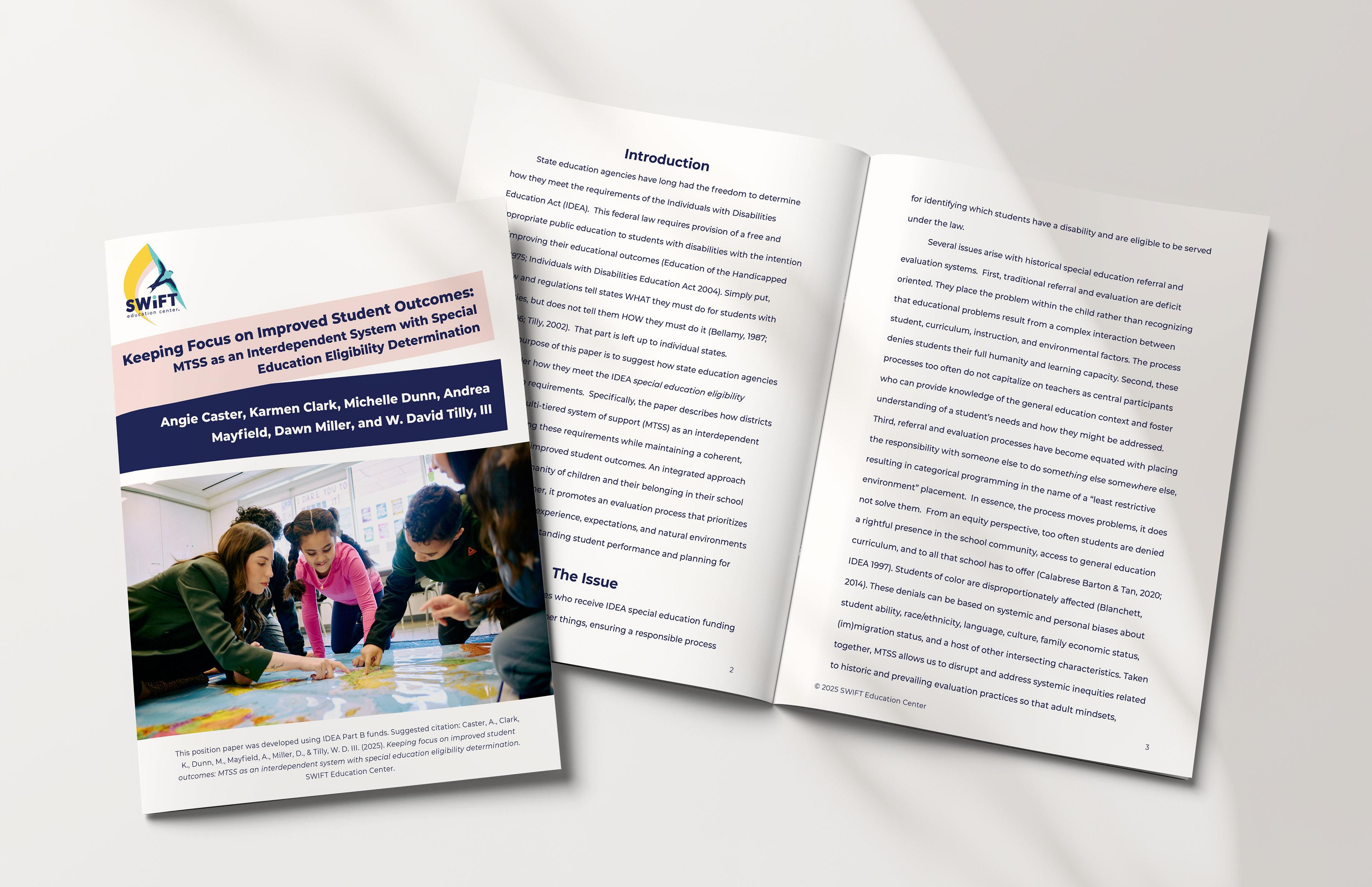
Improved Student Outcomes Research
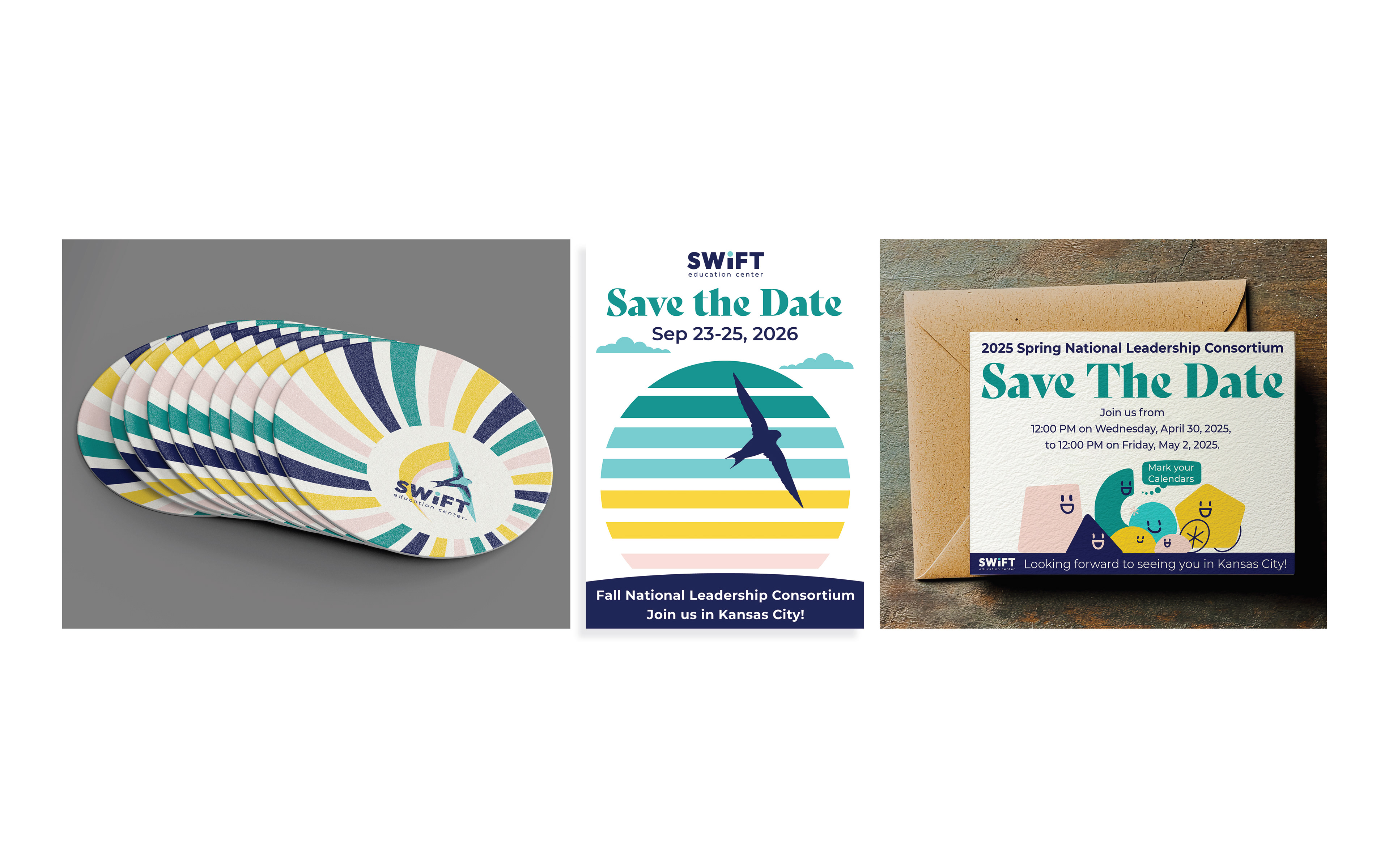
Annual Conference Stationary
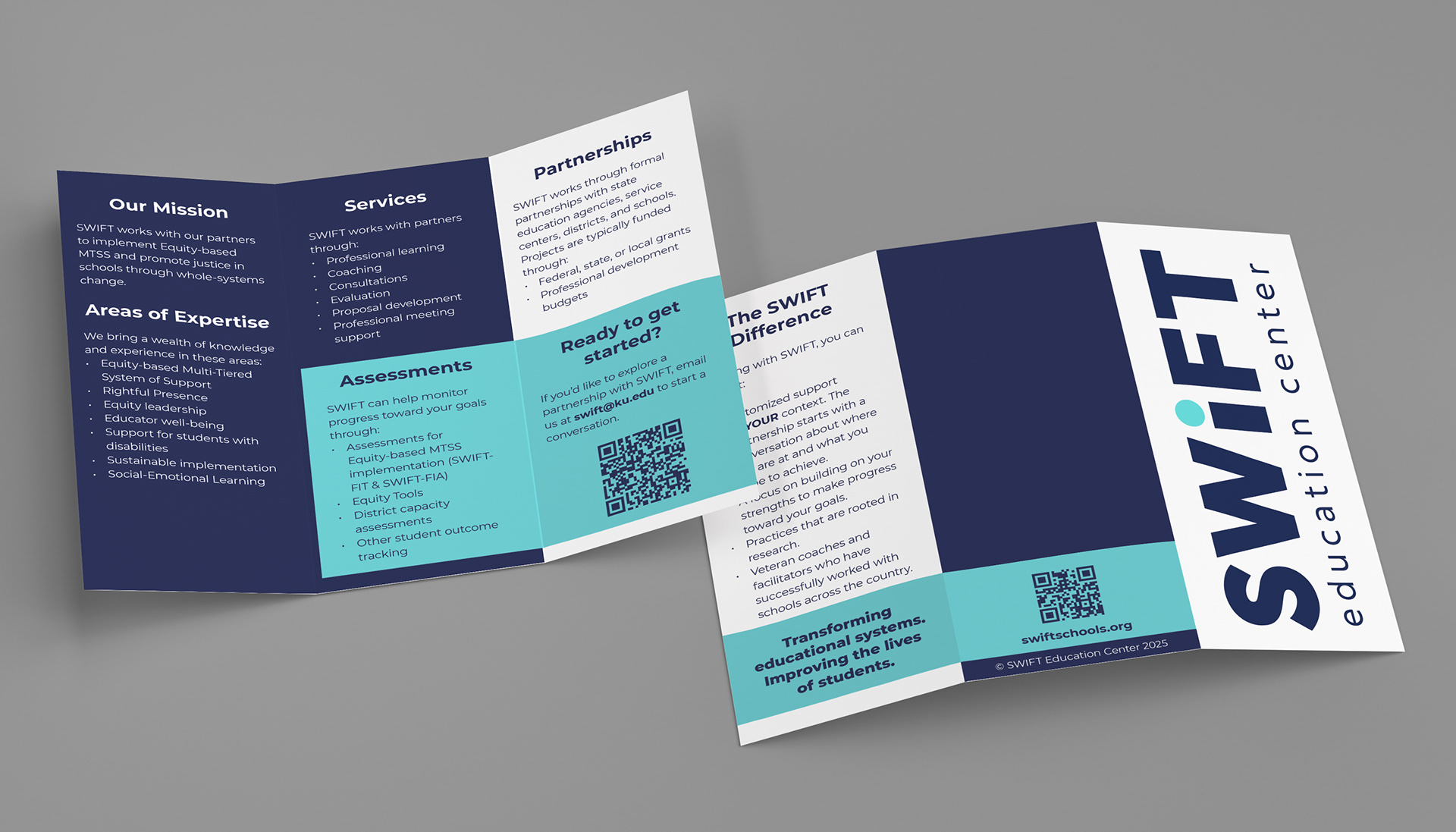
SWIFT Services Event Brochure
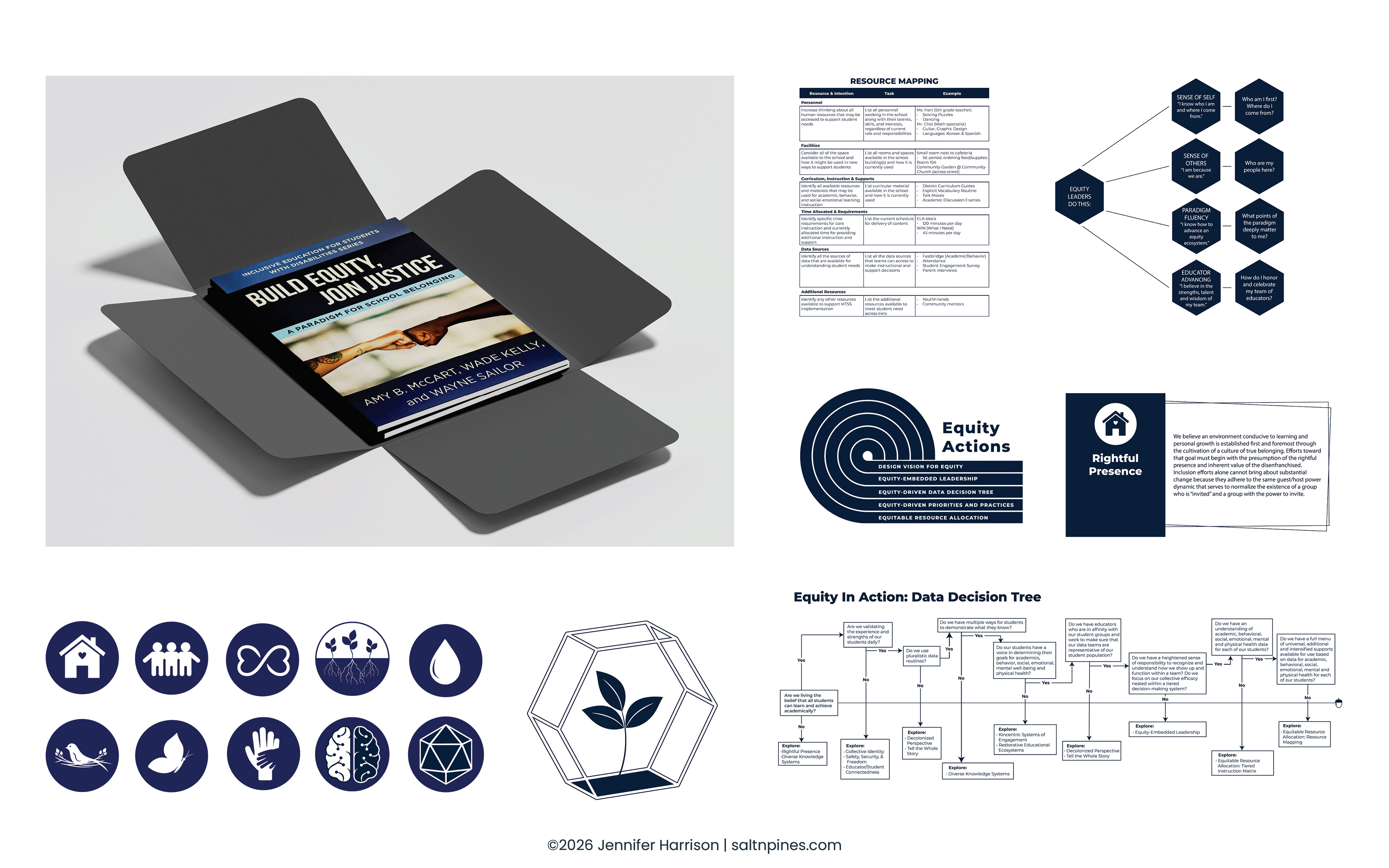
Published Norton Book Graphics
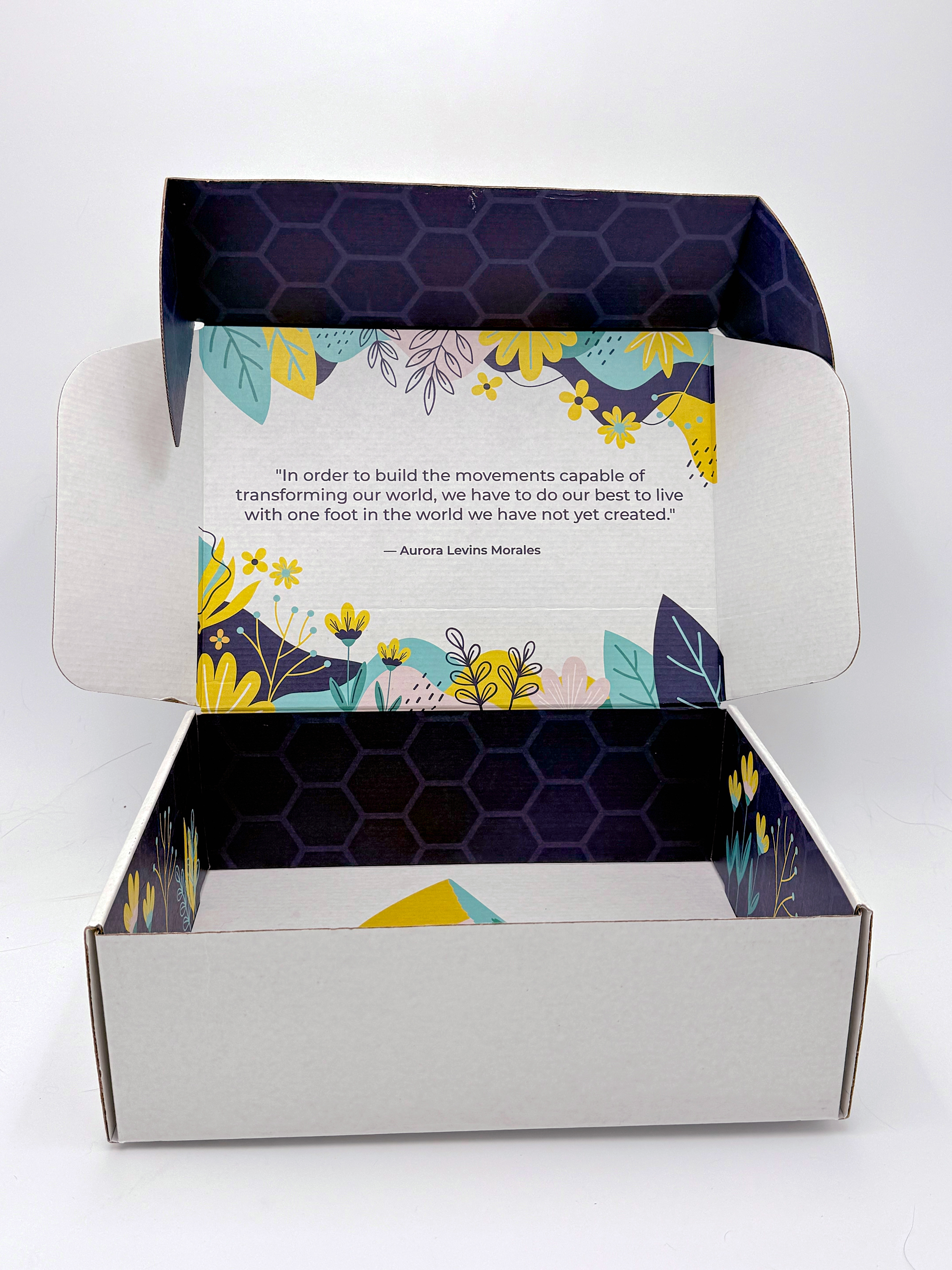
Large Mailer Box
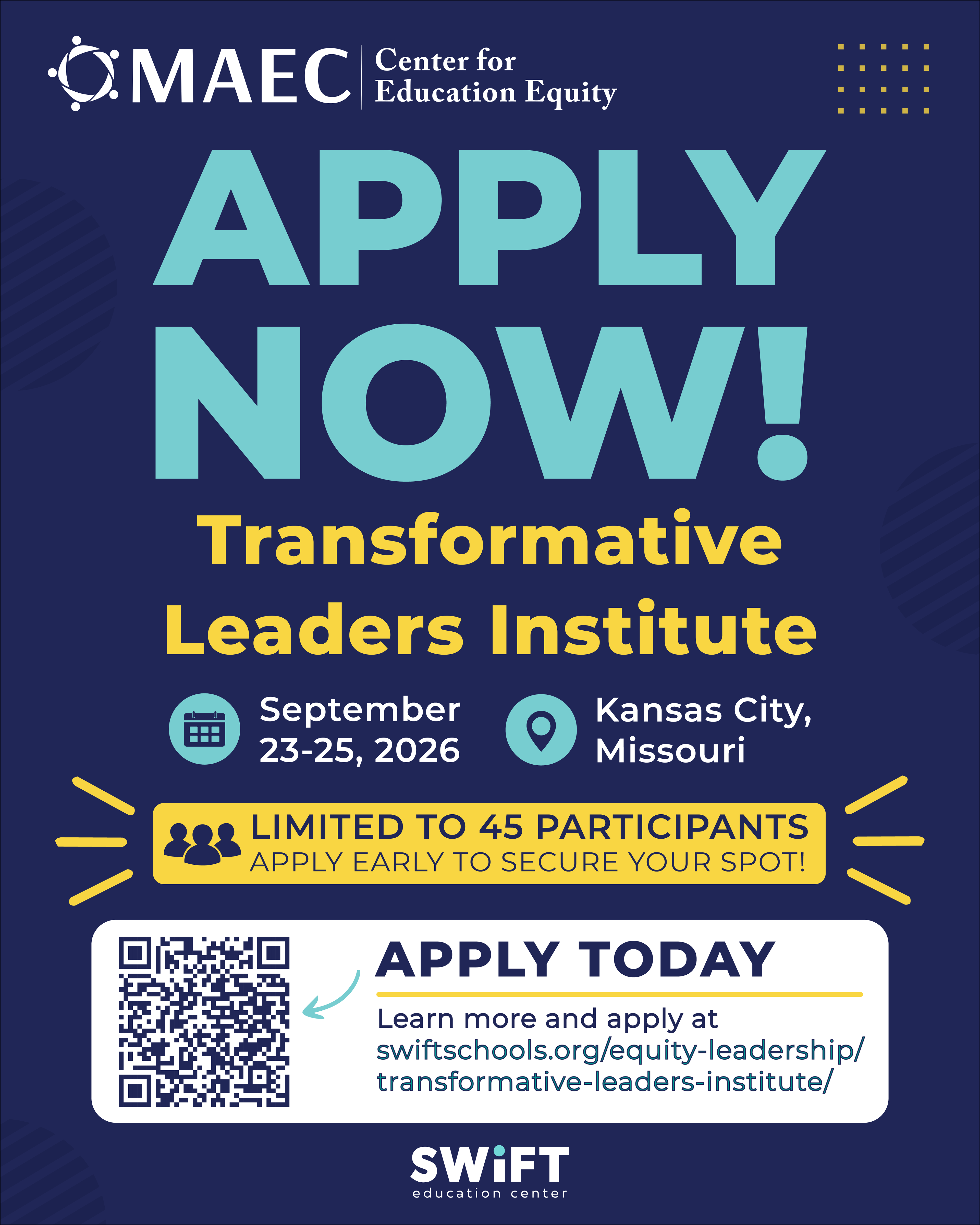
TLI Conference Invitation
Accessible Digital Communication
WordPress Page Design + Build
Center on Inclusion Toward Rightful Presence
Center on Inclusion Toward Rightful Presence
Designed and built a program page within SWIFT’s existing WordPress environment, organizing complex educational equity content into a clear information hierarchy while applying established brand and accessibility standards.
Social + Motion Design
Developed an ongoing series of animated social content to translate podcast topics into concise, accessible promotional experiences and encourage audience engagement across social channels.
Presentation + Motion Design
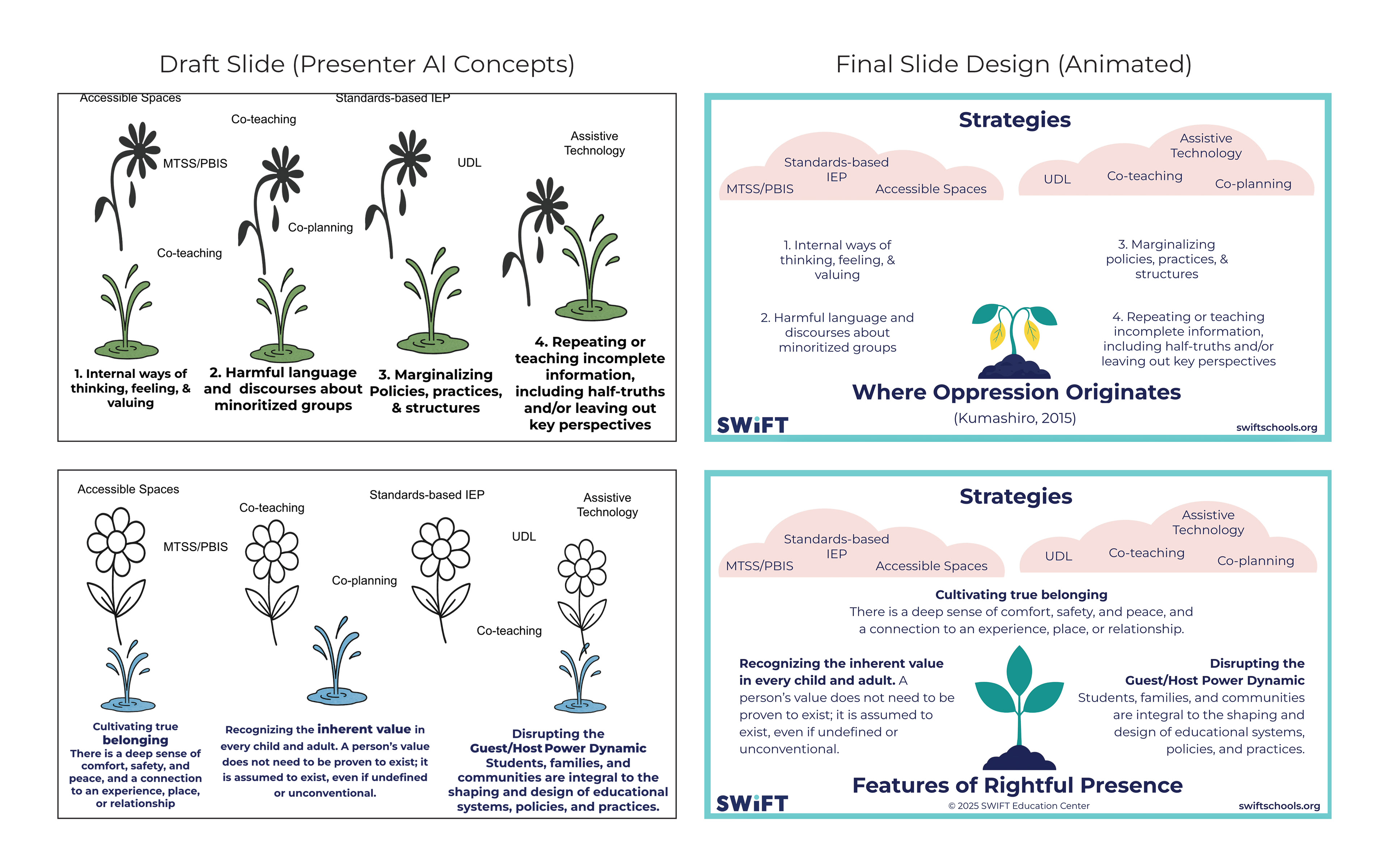
Translated researcher and presenter concepts into clearer visual narratives, using hierarchy, illustration, animation, and accessible presentation practices to communicate complex ideas without changing the underlying research.
Accessibility as a Design Practice
What began as an identified accessibility gap became a repeatable creative practice spanning publications, digital communications, professional learning, presentations, events, and organizational resources.
The goal was never simply to produce compliant deliverables. It was to build accessibility into the organization’s creative process so the system could continue beyond any one project or designer.