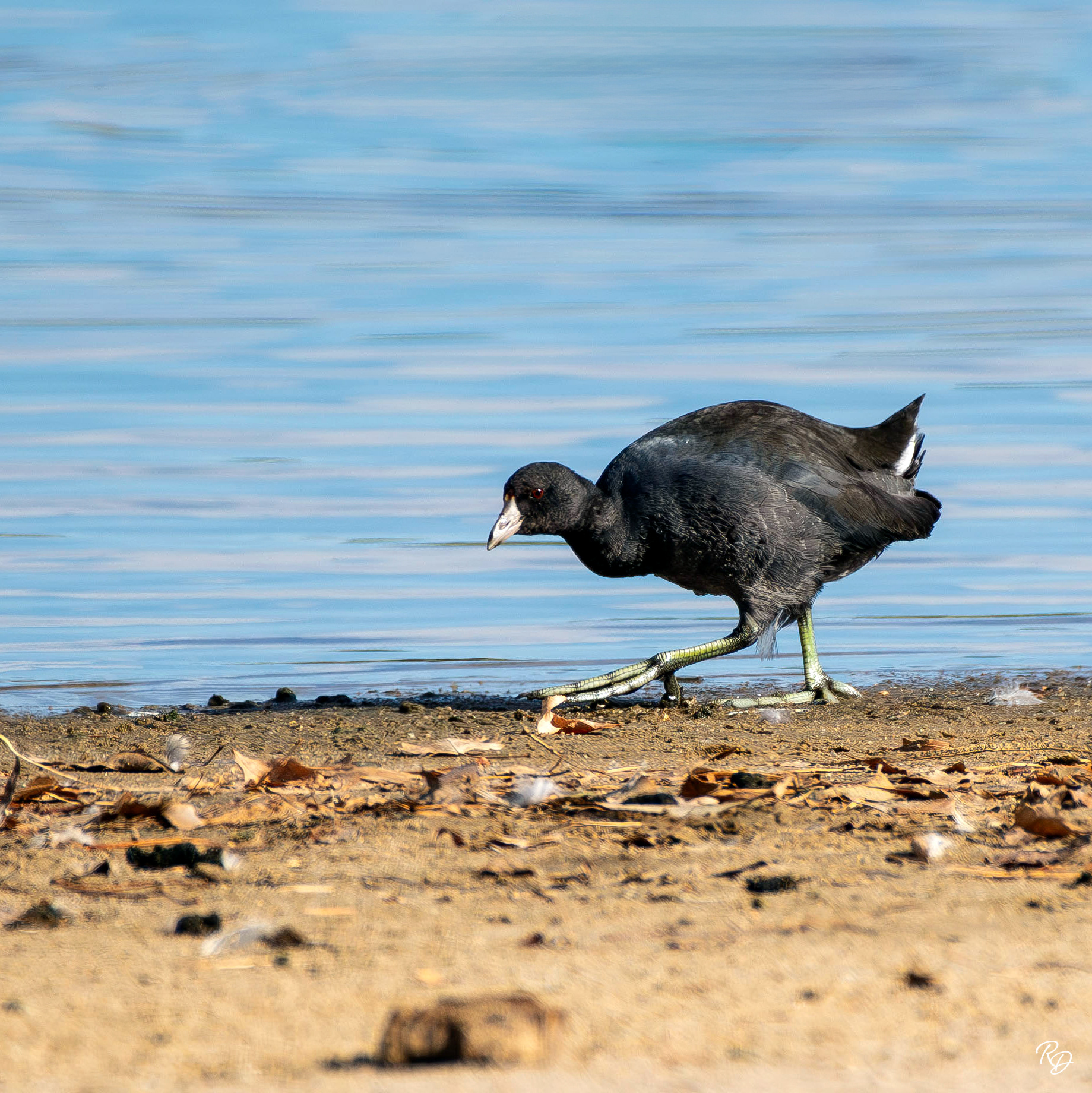
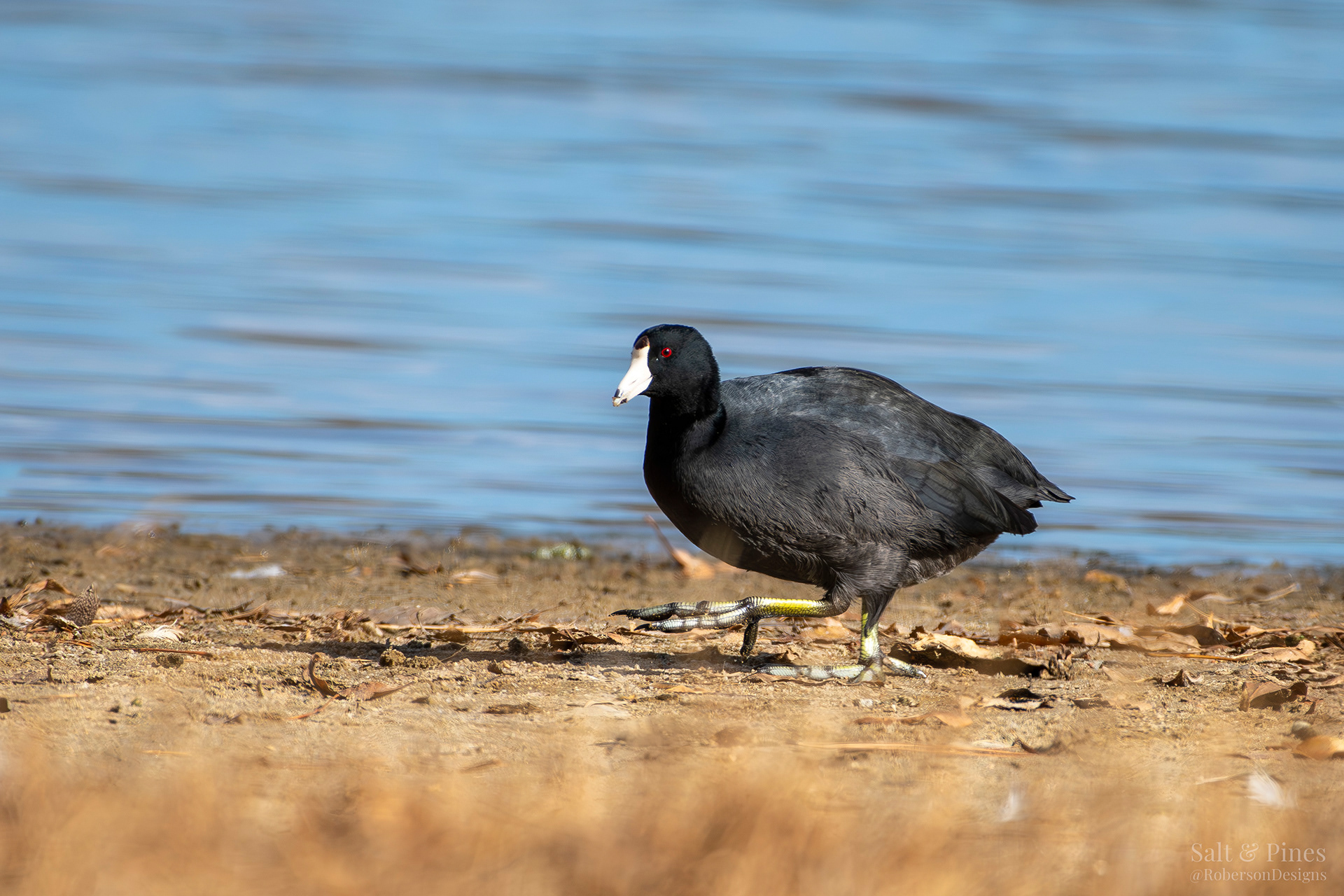
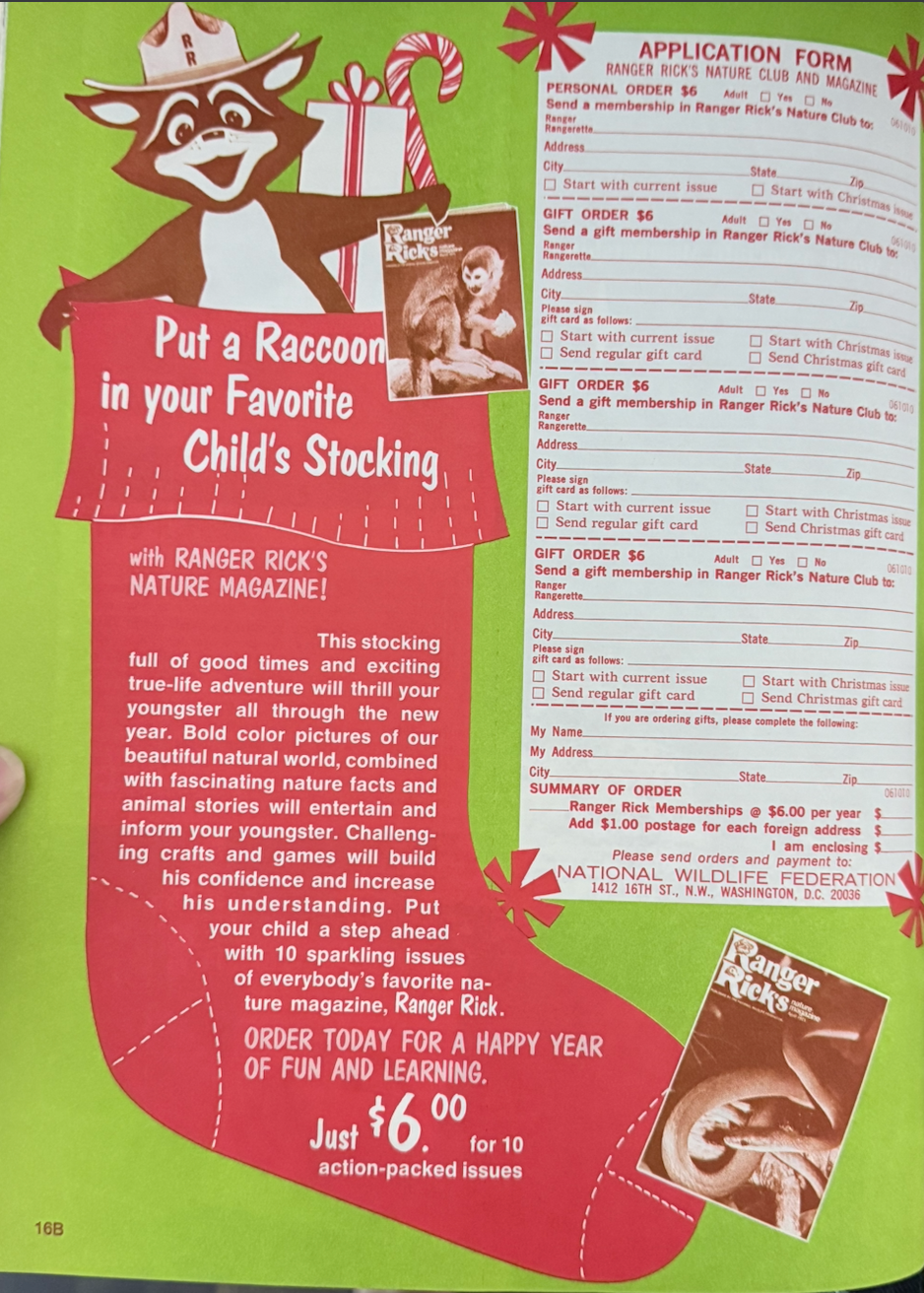
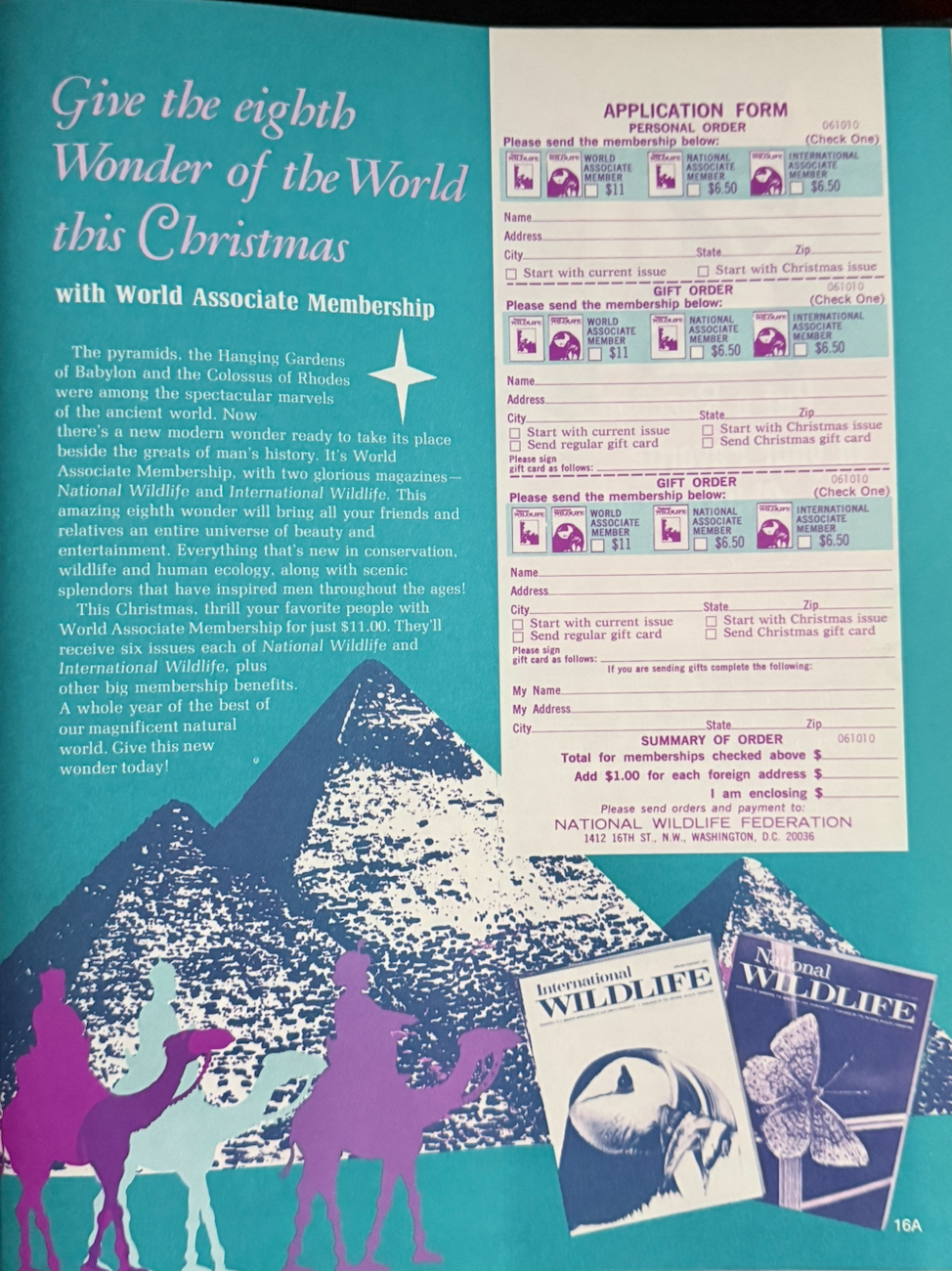
Wildlife photography has taught me that understanding an animal is just as important as capturing its image. I research the species I photograph to learn where and when to find them, understand their behavior, and discover the unique characteristics that make each one interesting. That curiosity is what keeps me in the field and has deepened my connection to wildlife and conservation. I chose the American coot for this concept because I love watching them move between land and water. They are fascinating birds, and there is something wonderfully goofy about those oversized feet.
American Coot by shoreline
American Coot Swimming
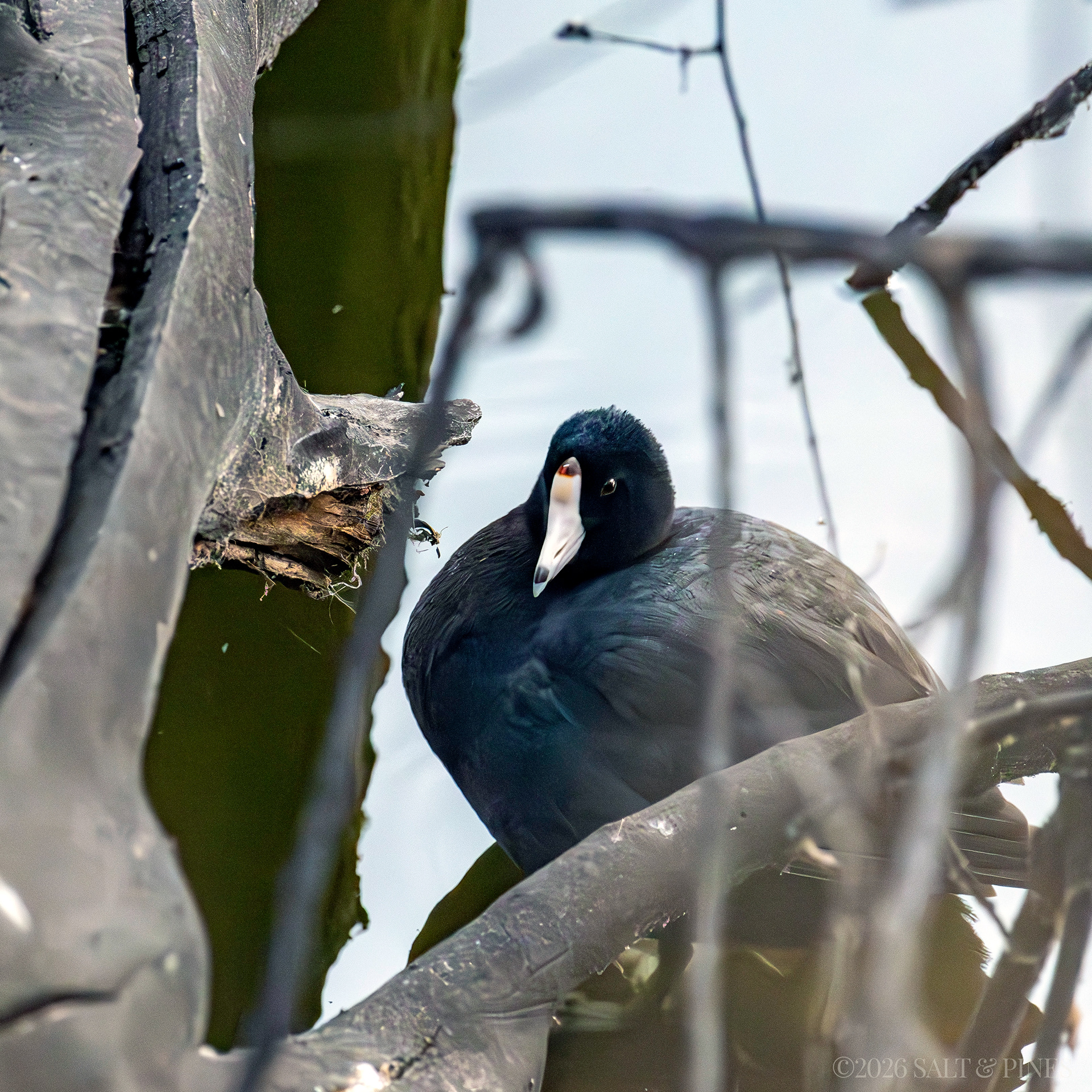
American Coot resting in brush by waters edge
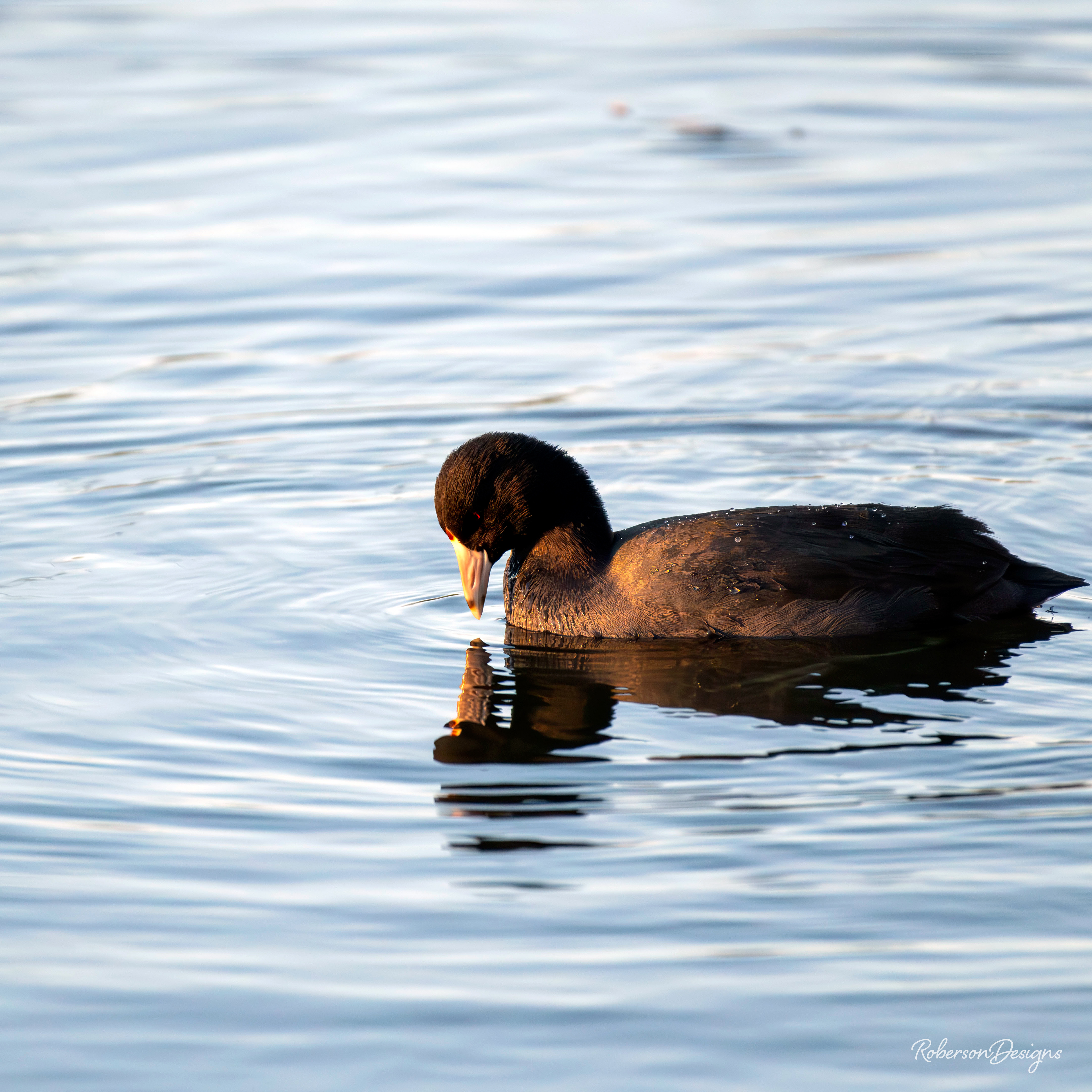
American Coot Swimming
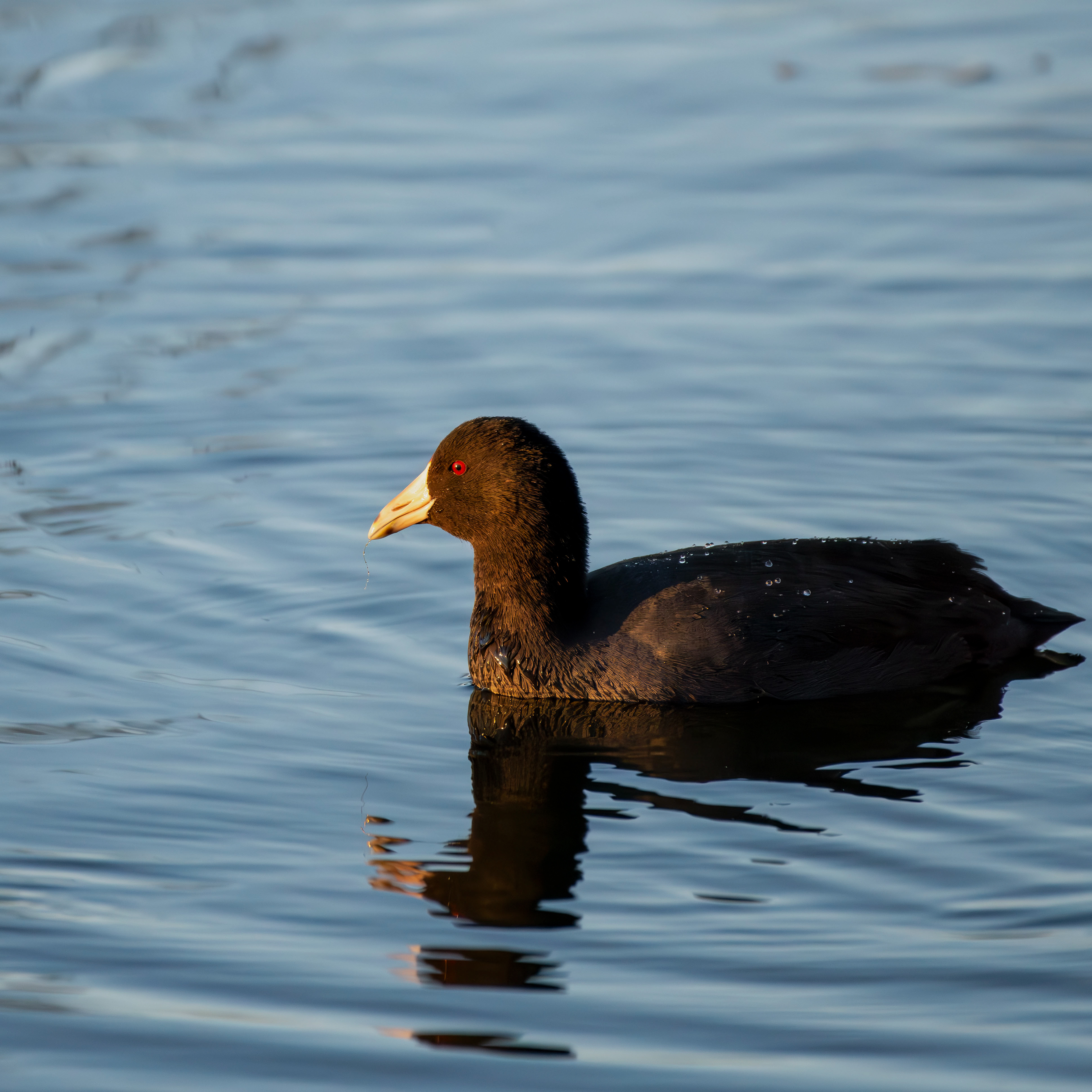
Photography by Jennifer Harrison
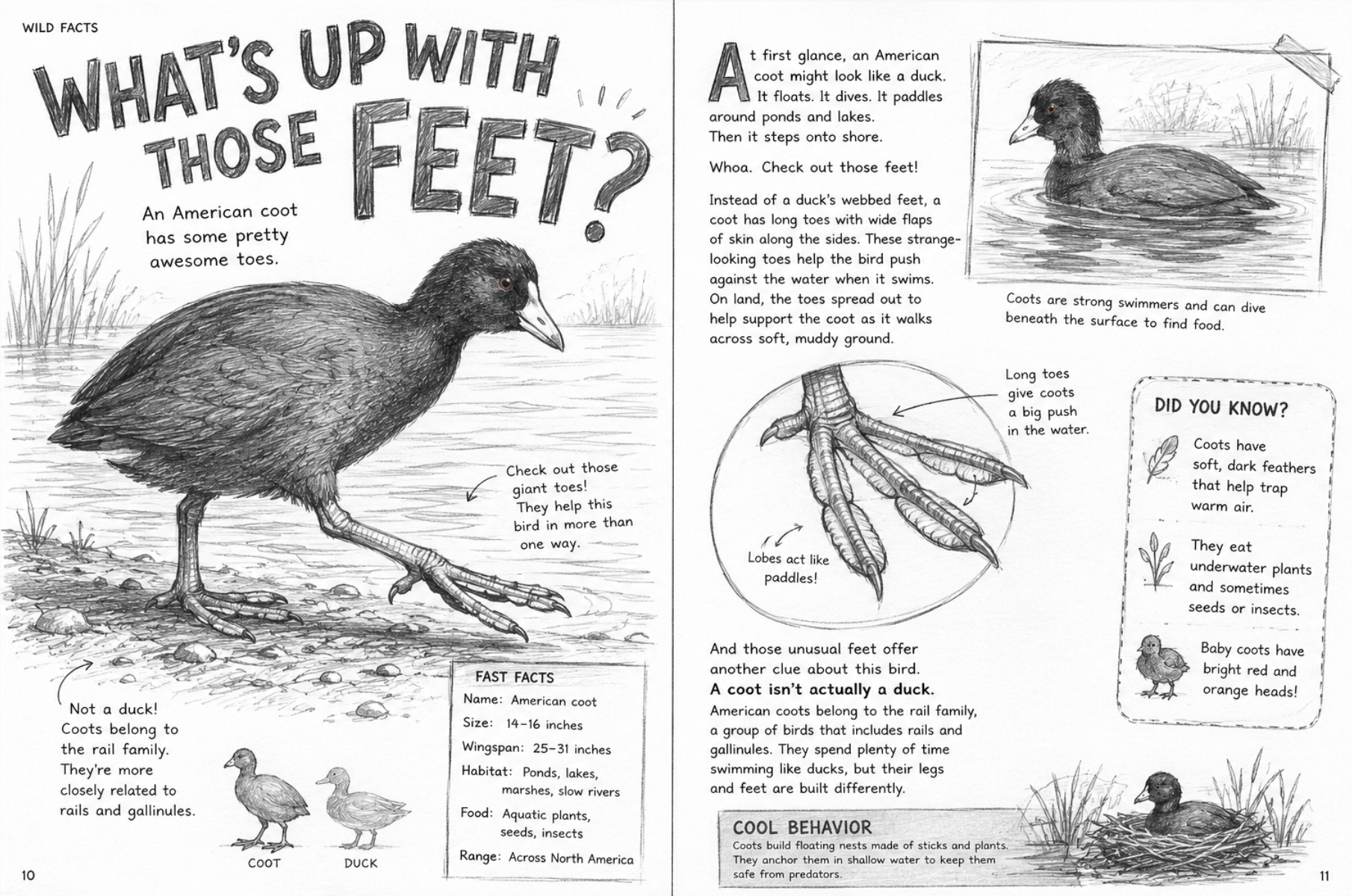
What’s Up With Those Feet?
American Coot Editorial Concept
Research · Writing · Photography · Art Direction · Editorial Design · Digital Content
The Idea
Wildlife photography often starts with observation. While photographing American coots, I became fascinated by their oversized feet and unusual toes.
That visual detail became the starting point for a story.
Rather than beginning with a list of facts, I wanted to begin with something a young reader could immediately see and wonder about:
What’s up with those feet?
From there, the story introduces how the American coot’s unusual anatomy helps it move through its wetland environment.
Research + Photo Inspiration
My original wildlife photography provided the initial inspiration for the concept and a visual reference for researching the species, its anatomy and behavior.
The photographs are not intended as a proposed image package. They demonstrate how firsthand observation can lead to questions, research and ultimately an editorial idea.
Story Approach
The question
Why does an American coot have such strange-looking feet?
The science
Unlike a duck’s webbed feet, a coot’s long toes have flexible lobes that help it move through water while also allowing it to walk across land and soft, uneven surfaces.
The audience
Ages 7–12
Ages 7–12
The approach
Start with something surprising and visible. Ask the question a curious child might ask. Then use that question as the doorway into the science.
Print Feature
What’s Up With Those Feet?
It swims like a duck.
It hangs around ducks.
But look at those feet!
The American coot isn’t a duck at all. And those strange-looking toes are one of the clues.
Instead of webbing stretched between its toes, a coot has long toes with flexible flaps called lobes. When the coot swims, those lobes spread out and help push against the water.
Step onto land, and those unusual feet have another job to do. Long, separated toes help the bird move across muddy shorelines and other uneven surfaces.
One set of feet. Two very different places to go.
Lobed, Not Webbed
Take a closer look at a coot’s foot.
A duck has skin stretched between its toes, forming a broad paddle. A coot takes a different approach. Each of its long toes has individual fleshy lobes along the sides.Art Direction: Pair a simplified illustration of a coot foot with a webbed duck foot. Keep the anatomy accurate while removing unnecessary detail so a young reader can understand the difference immediately.
Magazine Spread Concept for American Coot
Editing for Young Readers
Research language
American coots possess lobate toes that increase surface area and assist with propulsion in aquatic environments.
Edited for the reader
Look closely. Those aren’t webbed feet.
Each long toe has wide, flexible lobes. When a coot swims, those lobes help push against the water.
Editing priorities
Accuracy · Clarity · Voice · Grammar · Pacing · Age-appropriate language
The goal is not simply to make scientific information shorter. It is to preserve the science while making the reader want to keep going.
Editorial Workflow
Research → Story Angle → Draft → Fact Check → Expert Review → Revision → Final Feature
For publication, scientific claims would be verified using authoritative sources and reviewed by an appropriate subject-matter expert. Feedback would then be incorporated into the final story and its companion content.
Companion Quiz
Think Like a Coot
1. What makes a coot’s feet different from a duck’s?
A. Coots have no toes.
B. Coots have individual lobes along their toes.
C. Coots have feathers on their feet.
D. Coots have completely webbed feet.
B. Coots have individual lobes along their toes.
C. Coots have feathers on their feet.
D. Coots have completely webbed feet.
2. What happens to the lobes when a coot swims?
A. They help the bird push against the water.
B. They fold completely under the foot.
C. They grab underwater plants.
D. They keep the bird’s feet warm.
B. They fold completely under the foot.
C. They grab underwater plants.
D. They keep the bird’s feet warm.
3. True or false: An American coot is a duck.
False. Coots belong to the rail family.
4. Why are long, separated toes useful on land?
They help distribute the bird’s weight as it moves across soft and uneven surfaces.
5. You see a dark waterbird with a pale bill and unusual lobed toes. What might you be looking at?An American coot.
Companion Quiz for the American Coot Spread
Short-Form Video Concept
0:00
Coot walking.
Coot walking.
On screen:
THOSE are bird feet?
0:03
Close-up of the feet.
On screen:
Look closer.
Look closer.
0:06
Simple foot illustration.
On screen:
They’re not webbed.
They’re LOBED.
They’re not webbed.
They’re LOBED.
0:10
Coot swimming.
Coot swimming.
On screen:
Those flexible lobes help push against the water.
0:15
Coot walking along the shoreline.
On screen:
Then those long toes go right back to work on land.
End:
One bird. Some seriously interesting feet.
Video Storyboard
Social
WHAT’S UP WITH THOSE FEET?
They aren’t webbed.
Meet the American coot and discover how one very unusual pair of feet helps this bird move through two different worlds.
Read the story. Take the quiz.
Social Media Post for American Coot
Website Promotion
Meet the Bird With Some Seriously Strange Feet
It swims. It walks. And it does both with some of the strangest-looking toes around.
Take a closer look at the American coot and discover why its unusual feet are perfectly suited to life around the water.
Read the Story | Take the Quiz
Website wireframe for American Coot
One Idea. Many Touchpoints.
Print · Web · Quiz · Video · Social
The goal is not to repeat the same content in different formats. Each extension provides another way for a young reader to enter the story, whether through a photograph, a question, a surprising fact, or an interactive experience.
Visual Plan
The visual direction is intended to show my design thinking rather than suggest a final brand system. Without access to the full brand guidelines, I chose a bright, nature-inspired palette appropriate for readers ages 7–12, with strong contrast, clear hierarchy, and plenty of white space to support accessibility and readability. I limited the typography to three complementary typefaces, each with a specific role for headlines, supporting text, and body copy, creating variety without adding unnecessary visual complexity. Color is used purposefully to guide attention and organize information while keeping the wildlife and storytelling at the center. The final visual system would be adapted to Ranger Rick’s established brand standards.
Visual Plan for American Coot